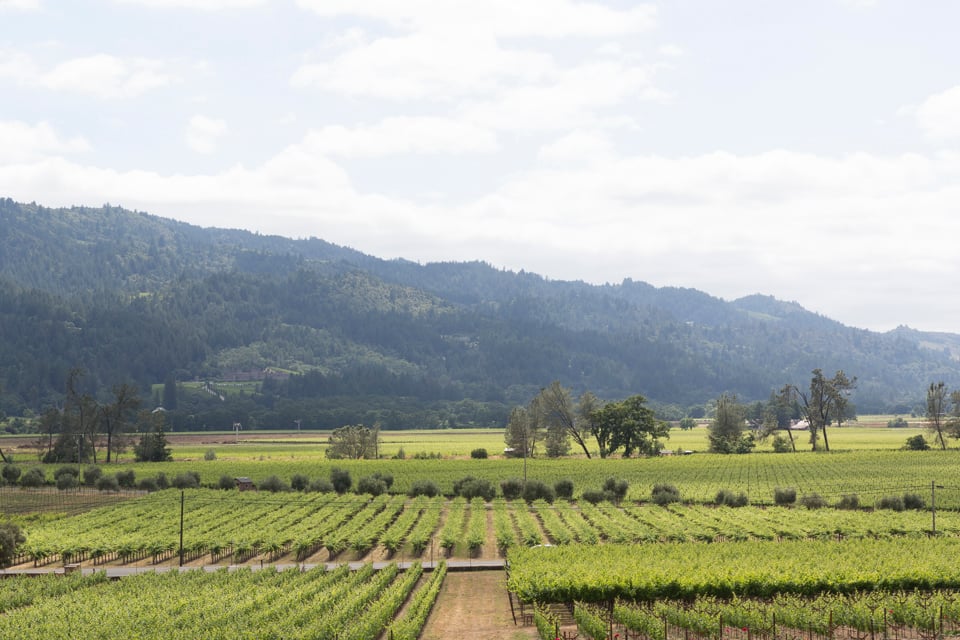
Our Calistoga Vineyard

While we’re proud to have vines planted across a number of different AVAs, our Calistoga vineyard holds a special place in our hearts as it’s home to our beloved Davis Estates.
Located in the northernmost region of the Napa Valley, this stunningly beautiful piece of land totals 155 picturesque acres, sweeping up from the famous Silverado Trail on the valley floor to a height of 1,100 ft at its crest. This vast contrast of elevation combines with a wide range of well-draining volcanic soils and microclimates to create an ideal place for our preeminent grapes to grow and thrive.
The Estate
Davis Estates is the culmination of a lifelong dream. When our family discovered this beautiful century-old estate winery, we knew the historic site was the perfect place to create a distinguished Napa Valley winery of our own.
After purchasing the property in 2011, we began the ambitious restoration project, breathing new life into the estate and restoring it far past its former glory to become a winery of the highest caliber – a modern, sophisticated space that carries the rich beauty and history of wine country into the 21st century.
Today, our world-class team is committed to building a sustainable property while crafting premier Napa Valley wines to be enjoyed not only today, but for generations to come.
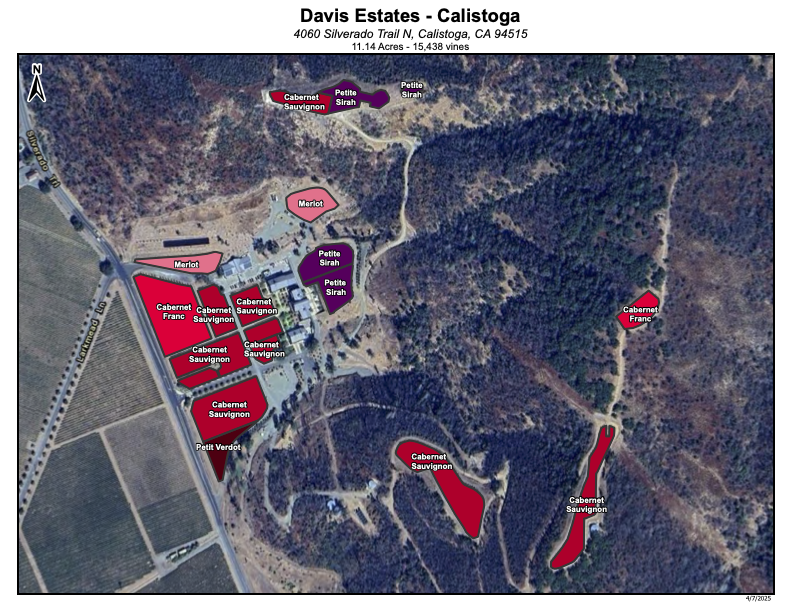
The Fruits of Our Vines
Cabernet Sauvignon
Petite Sirah
Cabernet Franc
Merlot
Petit Verdot
Petit Verdot is a grape that craves sunlight – and lucky for us, Napa Valley abounds in just that. This grape is commonly used in Bordeaux blends, and we love Petit Verdot wines for their dark and deep color and flavors when the vintage allows.
The Calistoga AVA
One of the most sought-after AVAs in California, the Calistoga AVA can be found in the northern part of Napa Valley. And though it was not officially recognized as an AVA until 2010, farmers have taken advantage of the ideal grape growing climate of the Calistoga AVA for centuries.
Before this iconic area was known for some of the world’s finest vineyards, it was home to the Wappo tribe, a Native American community that lived amidst several native villages in the area that would later become the town of Calistoga. Calistoga is famous for its hot springs, and the natives believed that these springs made the area a place for healing.
MORE INFO
It was these springs that caused Samuel Brannon to purchase 2,000 acres of land in the area – he knew of the legendary healing powers that they were thought to hold, and founded a hot springs spa. He also planted the first vineyards in the area in 1862.
Just under twenty years later, Calistoga was recognized as a wine growing area in the book, “History of Napa and Lake Counties.” By this point, several more wineries had begun to emerge – Kortum Wine Cellar, Schramsberg Vineyards, and Chateau Montelena.
Like the rest of California, the Calistoga area struggled during Prohibition – while a few wineries found loopholes, such as selling wine medicinally, Prohibition took its toll on Calistoga. However, decades later, Calistoga found its footing again in a post-Prohibition world, and has continued to grow and flourish with each passing year.
Since becoming an AVA, Calistoga has received more and more recognition for the world-class wines it produces – and we can’t wait to see all that the future has in store for this beloved corner of Napa Valley.