
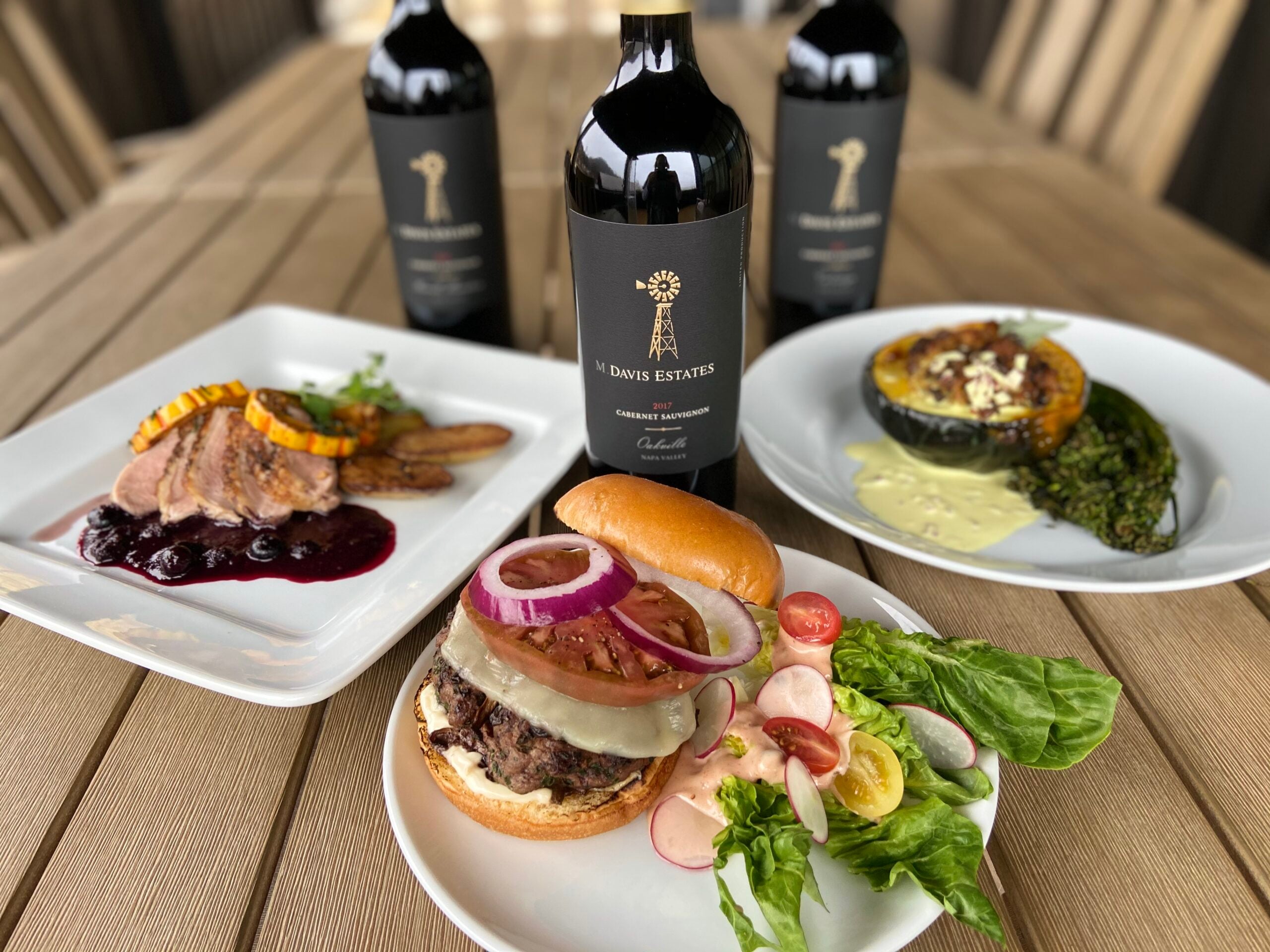
How Food Changes Wine And Why the Best Wine Tastings Include Both
If you’ve ever taken a sip of wine, thought, “That’s nice,” then taken another after a bite of food and wondered, “Wait…is this the same wine?” you’ve experienced one of wine’s greatest magic tricks. Except it isn’t magic. It’s chemistry, balance and timing, and when it works, it’s unforgettable.
One of our favorite moments during a culinary tasting is that second sip. The glass hasn’t changed, but the fruit may seem brighter, the tannins softer, or a flavor hiding in the background suddenly steps forward. It’s one of the reasons we believe wine belongs at the table.
For centuries, wine was part of a meal, a celebration and a conversation. Somewhere along the way, tasting became an exercise in evaluation, searching for blackberry, graphite, cedar and cassis before deciding whether we actually enjoyed the glass. There’s another way to understand wine: sometimes, you just need to take another bite.
Wine Doesn’t Change. You Do.
Imagine walking into a familiar room at sunset, then again the next morning in bright sunlight. Nothing in the room changed, but your perception did. Food can do something similar to wine.
Every bite changes the environment of your palate. Salt, acidity, sweetness, bitterness, fat and texture all influence what you notice when you return to the glass.
A rich bite may soften Cabernet’s tannins. Salt can make fruit seem more generous. Acidity refreshes the palate, while savory flavors can draw out earthy notes that were there all along.
You don’t need a chemistry degree to experience it. Take a sip, take a bite, then take another sip. That’s often all it takes.
Pairing Is About Balance, Not Rules
Wine pairing has collected plenty of rules over the years: red wine with meat, white wine with fish, Cabernet with steak. There’s truth in those traditions, but treating them as rules takes away half the fun.
A delicate white fish with lemon is very different from grilled salmon or lobster with butter. A grilled steak and braised short rib may both be beef, but fat, seasoning, texture and preparation change the pairing completely.
A better question is: What is happening on the plate? Is it rich or lean, bright or savory, spicy or sweet? Once you start there, pairing becomes less intimidating and far more interesting.

Cabernet Sauvignon Isn’t Always About Steak
Ask what goes with Cabernet Sauvignon and “steak” will probably be the first answer. It’s a classic for good reason, but Cabernet has far more range than it sometimes gets credit for.
Mushrooms can bring out earthy, savory characteristics. Aged cheese can soften tannins and let dark fruit shine. Roasted vegetables add sweetness and caramelization, while herbs can echo subtle notes already in the wine.
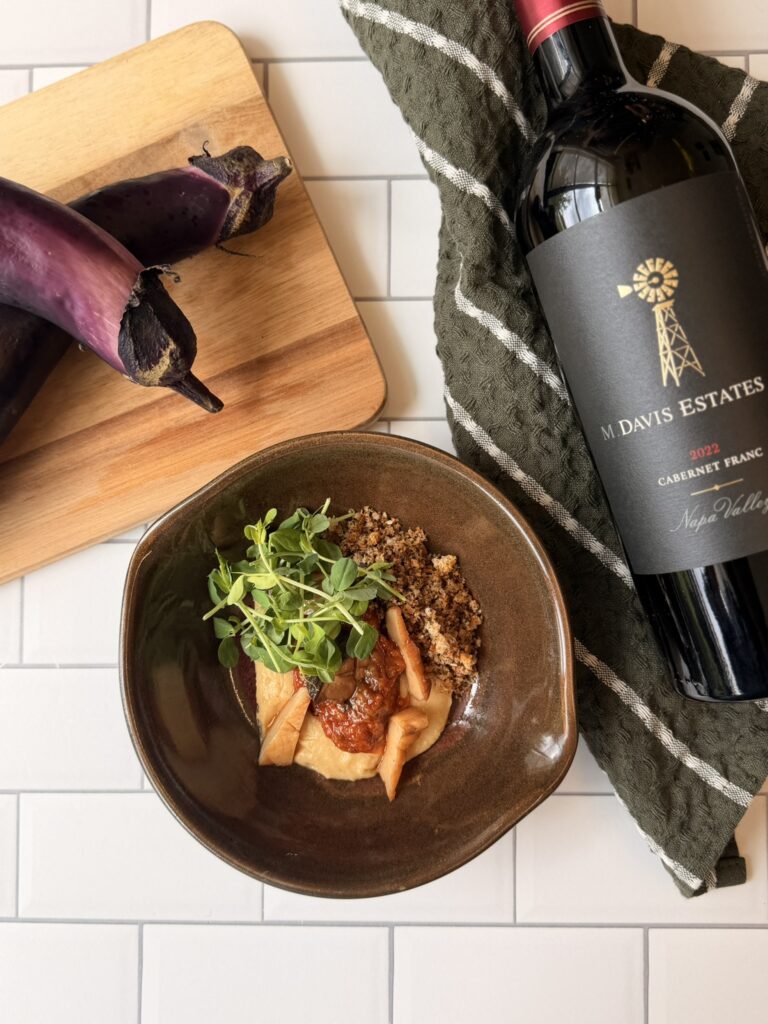
One of our favorite examples is our Braised Butternut Squash with Miso Glaze and Beet Purée, paired with Davis Estates Calistoga Cabernet Sauvignon. The earthy beet purée plays with the wine’s rocky, mineral character, while squash and apple butter add richness and contrast. Miso brings savory depth and enough acidity to keep everything bright.
No steak required.
Try the Braised Butternut Squash with Miso Glaze and Beet Purée
The goal isn’t one perfect food for one perfect bottle. It’s discovering how many personalities that bottle may have. Same wine. Different conversation.
The Classic Is a Classic for a Reason
Of course, sometimes you don’t need to reinvent anything. Beef brings richness, fat and savory depth that can soften Cabernet’s tannins, while the wine’s structure and acidity balance the richness of the dish.
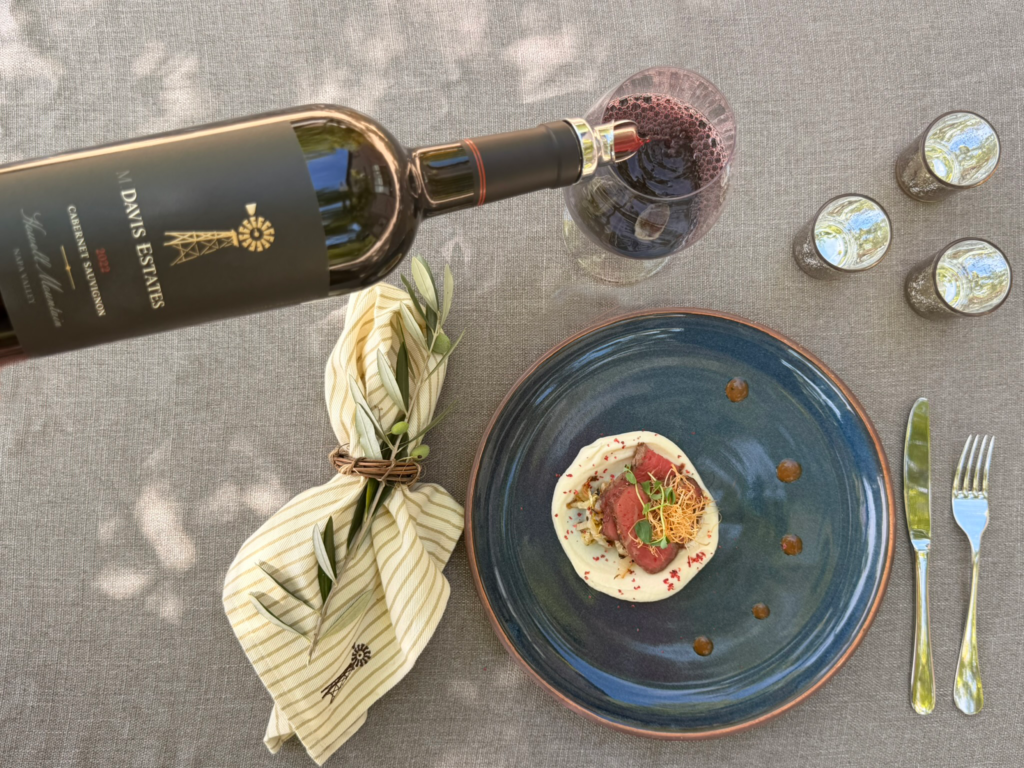
Our Slow-Roasted Striploin with Celery Root Purée and Sauce Au Poivre, paired with Howell Mountain Cabernet Sauvignon, shows exactly why the classic works. The striploin brings richness, the silky purée adds texture, and peppercorn sauce plays beautifully against the structure and savory character of the Cabernet.
Classic steak and Cabernet, with a few more things to talk about.
Want to try it at home? Get the Slow-Roasted Striploin with Celery Root Purée and Sauce Au Poivre recipe.
Flavor gets most of the attention in pairing, but texture can be just as important. Fat changes how tannin is perceived, crunch creates contrast, creaminess can soften a structured wine, and bright acidity resets the palate.
A chef isn’t simply matching flavors. Temperature, texture, richness and acidity all matter. The best pairings often feel effortless. They rarely are.
Five Pairings That Might Surprise You
Cabernet Sauvignon and Mushrooms — Earthy mushrooms can reveal savory characteristics sitting quietly behind the fruit.
Cabernet Sauvignon and Aged Parmesan — Salt, fat and concentrated flavor can soften tannin and make ripe fruit more expressive.
Rosé and Fried Chicken — Crisp acidity refreshes the palate while fresh fruit balances the richness.
Cabernet Sauvignon and Roasted Vegetables — Caramelization adds natural sweetness and savory depth to structured reds.
There are guidelines worth understanding and traditions worth respecting, but very few rules worth being afraid to break.
Why We Built Food Into the Wine Experience
There are many wonderful ways to taste wine in Napa Valley. For us, food has always been part of the experience because it gives wine another language.
A thoughtfully prepared bite can demonstrate something about a wine that ten minutes of technical explanation cannot. You can talk about acidity, tannin and structure, or you can let someone taste the difference.
Our culinary team keeps the wine at the center of the conversation. The goal isn’t to create a dish that steals attention from the glass, but to reveal something new about the wine: harmony, contrast or sometimes a complete surprise.
And sometimes it ends with the question we never get tired of hearing: “Why does this taste completely different now?”
A Little-Known Davis Fact
Our culinary pairings begin with the wine, not the recipe. The team tastes each wine for structure, acidity, texture and personality, then creates a dish to reveal another side of it.
Before a new pairing reaches our guests, our staff tastes the entire experience together. We want as many palates at the table as possible because everyone tastes differently, and that feedback helps us fine-tune the pairing.
It’s also a good reminder that there isn’t one “correct” way to taste wine. If our own table doesn’t experience it exactly the same way, we certainly don’t expect you to either.
What Happens Around the Table Matters Too
A great pairing can teach you something about wine. A great experience can make you forget to check your phone.
Around the table, guests compare what they notice. One finds blackberry, another baking spice, and someone else simply knows they like it. They’re all right. Wine isn’t a test, and curiosity matters more than vocabulary.
Try It at Home
You don’t need a chef or an elaborate menu to experiment. Taste a wine on its own, then try it with something simple: aged cheese, a roasted mushroom, something salty or something creamy.
Return to the wine. What changed? The point isn’t to prove one combination is perfect. It’s to notice the relationship between what’s on the plate and what’s in the glass.
Food Pairing Isn’t About Perfection
There isn’t one perfect pairing for every bottle. Personal preference matters. The occasion matters. The people around the table matter.
Sometimes the pairing you remember most isn’t technically perfect. It simply happened at the right moment with the right people. Wine isn’t meant to be solved. It’s meant to be shared.